

Imagine the same idea, but on a wall-sized canvas – it impresses with its scale. Now, the same idea fits in the palm of your hand – it compels you to listen to the details. Shape, size, and proportions in art are the key to how a viewer perceives a painting and experiences emotions from it; together, they define the work’s format.
This language can express drama, intimacy, or revolution. How does this "play of formats" influence your creativity, and how does it shape the viewer’s perception of the artwork? Let’s explore – with examples, advice, and inspiration.
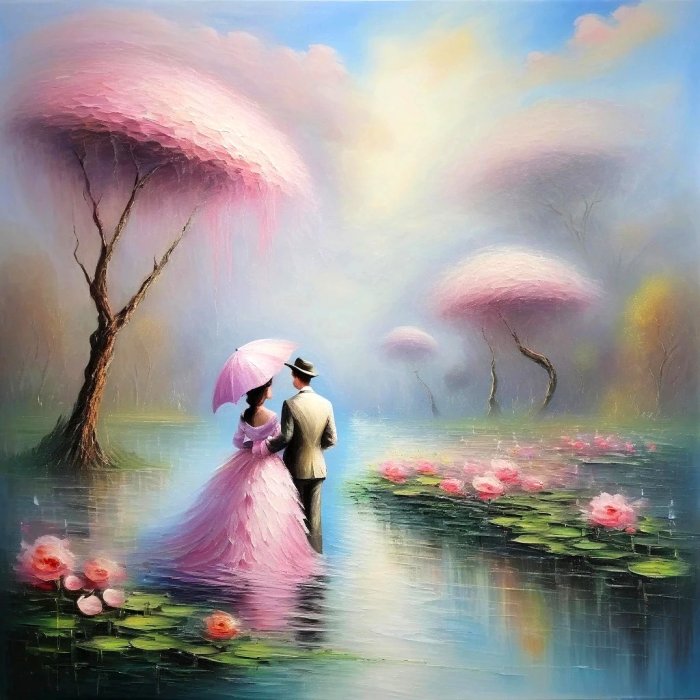
Art has always been a language that allows us to express what cannot be conveyed through words. Symbols and metaphors have become key tools for artists who seek to tell a story, evoke emotions, or communicate ideas through their works. They enable the viewer not only to see the image but to feel its meaning, to immerse themselves in the hidden story of the painting, and to discover new horizons of perception.
For an artist, the use of symbols and metaphors offers a chance to go beyond mere depiction and create a multi-layered piece. One could stand in front of such works for hours, unveiling their meanings layer by layer, only to never fully do so or even reach opposing conclusions. But how can these elements be properly integrated into one’s creativity?

Creative block is that moment when it feels like your muse has abandoned you, and the canvas remains empty, like a desert. Every artist, from beginner to master, encounters this challenge at some point on their journey.
However, there’s no need to despair, as there are countless ways to break through this barrier and once again feel the flow of inspiration that fills you with creative energy. First and foremost, it’s important to recognize that creative block is a natural occurrence in human psychology, not a sign of failure as an artist.
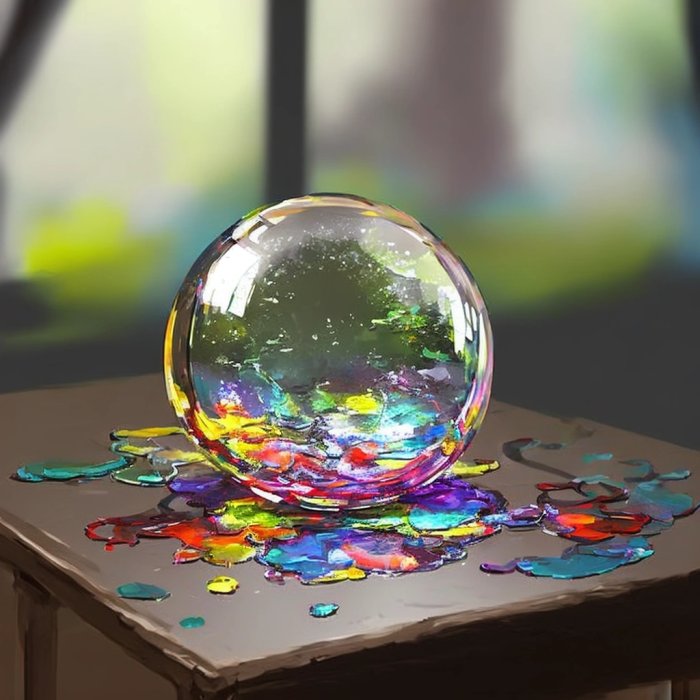
Transparent objects have always intrigued artists, evoking both admiration and a certain trepidation. A glass of water, a crystal vase, or even an ordinary plastic bag – these all seem challenging to depict, as such objects have little to no color of their own. How can one capture lightness, the play of light, and the distortion of form? How can transparency be created without actual transparency?
Transparent objects transmit, refract, and reflect light and surrounding colors. Therefore, the artist does not simply paint the object's outline but recreates how it interacts with space and light.
New on the Site:
-
 An Artist’s Unconventional Tools – Painting with Fingers, a Sponge, and Even a Fork
2026-05-24
An Artist’s Unconventional Tools – Painting with Fingers, a Sponge, and Even a Fork
2026-05-24
-
 Art Courses for Adults – How to Help Unlock Your Creative Potential?
2026-04-23
Art Courses for Adults – How to Help Unlock Your Creative Potential?
2026-04-23
-
 How to Convey Emotions in a Portrait – The Language of Feeling at the Tip of the Brush
2026-03-28
How to Convey Emotions in a Portrait – The Language of Feeling at the Tip of the Brush
2026-03-28
-
 How to Learn Portrait Painting from Scratch: A Step-by-Step Guide for Beginners
2026-02-16
How to Learn Portrait Painting from Scratch: A Step-by-Step Guide for Beginners
2026-02-16
-
 Being an Artist: Should You Compare Yourself to Other Artists? The Case For and Against
2026-01-29
Being an Artist: Should You Compare Yourself to Other Artists? The Case For and Against
2026-01-29
