
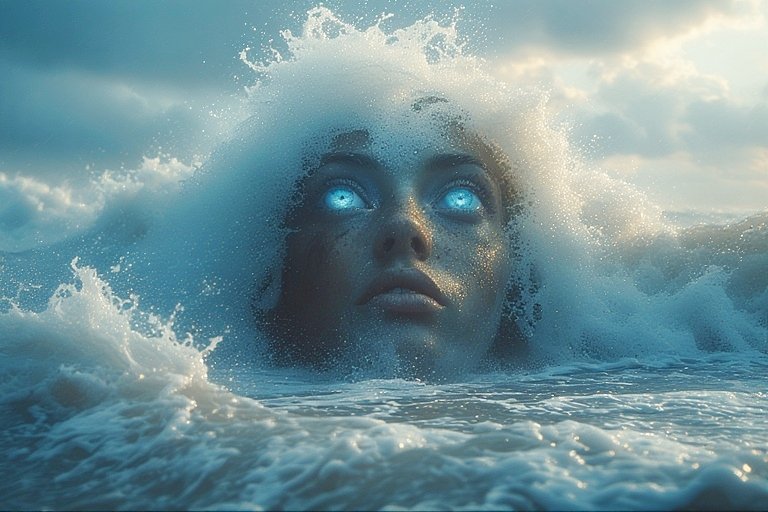
 How many times have you seen someone in a gallery standing in front of a painting and quietly crying? Or conversely – seething with indignation while looking at an installation? Art has this amazing power: it strikes straight to the heart, bypassing the mind. But who thinks about the consequences of this blow?
The Influence of Art
Strange thing: in art schools, they teach everything from mixing paints to the history of styles. Only here's one thing they almost never talk about: that an artist doesn't simply paint a picture – they influence. They influence mood, thoughts, even people's worldviews. And any influence carries responsibility.
In the past, an artist could hide behind the walls of their studio. Painted something – hung it in a small gallery – a few dozen people looked at it over the course of a month. Today, one photograph of a work on Facebook, Instagram, or a personal website can gather a million views in a few days. The whole world becomes your audience, whether you want it or not.
The phrase "I paint only for myself" sounds beautiful, but it's not true. Even if you hide your works in a closet, sooner or later someone will see them – your mother, a friend, a child... Your art will reach someone anyway.
Difficult Topics in Art
War, death, violence – these are difficult topics, but artists are drawn to them too (especially when there's a war in your country, as happened to me). It seems noble to show the horrors of the world, to call for peace through art. Only it doesn't always turn out well. People who have experienced real trauma might see in such works not a call for peace, but a trigger for painful memories.
What to do? Give up on complex topics? No. You just need to prepare especially responsibly. Read not just articles on the internet, but real research. Talk to psychologists, historians, witnesses of events. Understand that behind every topic stand living people with real pain. It's very desirable that the created work becomes catharsis leading to inner healing, rather than another reminder of experienced horrors.
Symbolism from Other Cultures
Sometimes artists "borrow" symbols from other cultures. Here's a beautiful African ornament, here's a Native American totem, here's a Tibetan mandala. It seems like it's just decoration. But imagine if someone took a cross or the Ukrainian national trident and used it as an element of entertainment ambiance on a t-shirt without any respect for these symbols. Unpleasant? Now think about what people feel when their sacred symbols become just "cool pictures."
There's a certain rule here: if you want to use elements of someone else's culture – get acquainted with it. Find out what these symbols mean, what history they carry. Even better – talk to people for whom this culture is native. Perhaps they'll tell you something you won't find in books or on the Internet.
Art for Money
Money in art is a delicate topic. Everyone wants to create, but they also want to live well (and at minimum, they want to eat). So artists take on commissions. Sometimes not very pleasant ones. Paint an advertisement for cigarettes? A logo for a dubious company? A portrait of a politician you hate?
Everyone makes the decision themselves. But there's one test that helps. Before taking on a questionable commission, think: could you explain to your children why you did this? If the only answer is "for the money" and there's no hint of "I like this" – it's better not to take it on.
You can create a simple ethical code for yourself. Write on paper: who you're ready to work with, who you're not. Which topics you'll touch on, which you'll avoid. These aren't rigid rules, but rather guideposts for difficult moments.
Artificial Intelligence in Art
Artificial intelligence is a new challenge for artists; some even call it a "headache." Programs already know how to paint in Van Gogh's style, copy Rembrandt's technique, create "new" works by Rubens in a matter of minutes.
At first it seemed like this was the end of art. Then came understanding: this is just a new tool – just as cameras, computers, tablets once appeared, so now technologies offer new means for reflecting reality and self-expression.
The main thing here is honesty. If you use AI as an assistant – say so. Hiding this is the same as passing off someone else's work as your own, and viewers have the right to know how the work was created.
The Cult of Success on Social Media
Social networks have turned artists' lives into a continuous show. A cult of success reigns there, of perfect studios, endless inspiration. Young artists look at these pictures and think: "Something's wrong with me. Why isn't it so beautiful for me, not so fast, not so successful?"
What if social networks showed the truth? Dried paints, failed sketches, creative crises, doubts? It seems this isn't what most viewers want to see, who don't always understand: such truth wouldn't undermine authority, but on the contrary, would make the artist closer to other people. It would show that art isn't magic, but hard work with a heap of mistakes and revisions.
Art and Ecology
Ecology has reached art too. Toxic paints, mountains of plastic tubes, canvases that end up in landfills after ten years – all this makes us think about how nature suffers from our "creative" actions. It's time to be responsible: experiment with natural pigments, look for alternatives to chemicals, use digital techniques (where possible) instead of physical materials.
This isn't a limitation – it's a challenge. Sometimes it's precisely limitations that birth the most interesting ideas. Remember the Japanese with their ink and rice paper, or our distant ancestors who painted on cave walls with ochre and charcoal. Modern eco-artists prove: creativity and care for the planet can go hand in hand. The main thing here is to experiment and seek new paths.
Being a Teacher to Other Artists
Many artists become teachers, using master classes, painting courses, social networks, webinars. Actually, this is such a responsibility that far from everyone realizes. You influence not only your students' technique, but also their worldview. The worst thing here is to create an army of "clones" who copy your style and think that's how it should be. Much better is to teach people to think, experiment, seek their own voice, build their own conversation with themselves and the world through art.
Therefore – talk about ethics along with technique. Explain why you choose certain topics. Show different approaches, not just your own. Encourage students to ask questions, doubt, seek their own answers.
What's Most Important?
And finally, perhaps most importantly. Ethical responsibility is a combination of moral values and creative freedom. You are not obliged to save the world with every painting, just as you cannot control all the reactions of the viewers. Your task is to be honest in your intentions and professional in carrying them out.
Art is a conversation between you and the world. You say something, the world responds. Moreover, sometimes it responds not what you expected, and sometimes quite unexpectedly – and that's normal. The main thing is that your part of the conversation be sincere.
Ethics in art isn't a list of prohibitions. It's a compass that helps you navigate your own creativity, be responsible, and respect yourself for your actions. An artist with a compass can allow themselves to go further, risk more, explore deeper, because they know: even if they wander into a dark forest, they'll always find their way to the light.


