
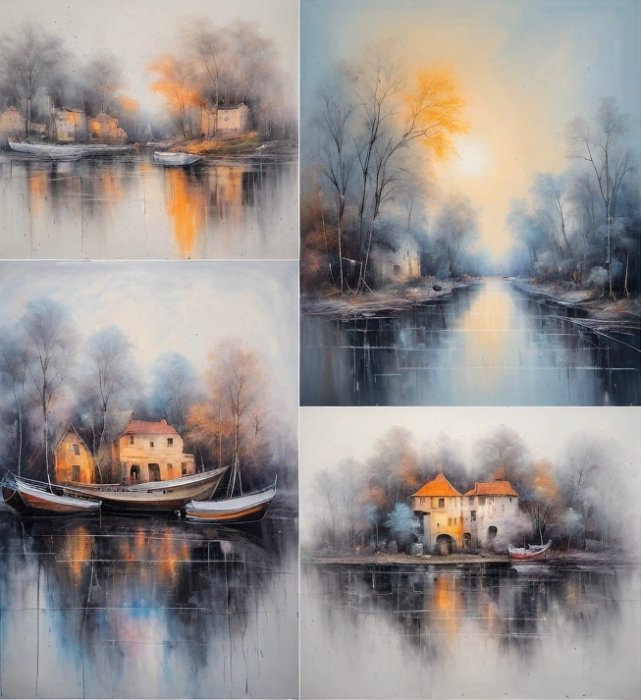
 The size of a group plays a pivotal role in the effectiveness of learning to paint. It determines how comfortably participants can interact with each other and the instructor, how quickly they master new techniques, and whether they feel motivated to develop their creativity. Groups of 3-6 participants (excluding the artist) are considered the optimal size. This format strikes a perfect balance between the instructor’s individualized attention and the benefits of collaborative learning.
In small groups, the instructor can devote sufficient time to each participant. This allows for detailed explanations of complex painting techniques, correction of technical errors, and adaptation of guidance to suit individual styles. In larger groups, this is rarely possible, as the instructor has limited time for each student. In contrast, smaller groups enable the instructor to closely monitor each participant's progress, support beginners, and stimulate the growth of more experienced learners.
A group of several participants fosters a creative atmosphere conducive to interaction and mutual support. Guided by the instructor’s personalized approach, participants can freely exchange experiences, observe each other’s techniques, and draw inspiration. For instance, even watching others work can often spark new ideas or help identify one’s own mistakes from a fresh perspective. The instructor is always nearby to assist, creating a sense of collective support that is vital for developing artistic skills.
Psychological comfort is another significant factor. Medium-sized groups eliminate the pressure often felt in larger classes while still providing participants with the resources and camaraderie of shared learning. This shared journey ensures students feel they are not alone in their artistic endeavors. The emotional environment is typically relaxed, allowing individuals to unlock their creative potential without fear of mistakes.
Learning in such groups is highly flexible. The instructor can adjust the lesson pace based on participants’ skill levels, offer personalized tasks, or facilitate group discussions on creative works. This dynamic process ensures everyone gains new experiences and broadens their knowledge.
The format of a group of 3-6 participants also lends itself to larger projects. Collaborative work on a single composition or a thematic series of paintings allows each participant to showcase their skills and learn teamwork. Mutual support in such settings often leads to quicker problem-solving, as participants assist each other not only morally but also technically.
This group size is particularly effective for exploring a variety of painting techniques. Each participant works in their own style, providing others the opportunity to observe unconventional approaches and potentially adopt useful ideas. These shared resources often push students toward better results.
Summary
While individual painting lessons offer the full attention of the instructor, they often deprive students of the chance to interact with peers. Larger groups, on the other hand, compromise the quality of instruction due to limited one-on-one engagement. Small groups strike the perfect balance, combining a personalized approach, a comfortable atmosphere, and the inspiration of collaborative creative interaction.
Groups of 3-6 participants, such as those in courses like “Academic Painting” or “Oil Painting”, offer the most enriching learning experience. This format facilitates rapid progress, ensures individualized guidance, and fosters a positive environment for developing artistic skills. It is an ideal choice for anyone seeking to master the art of painting as effectively as possible.


