
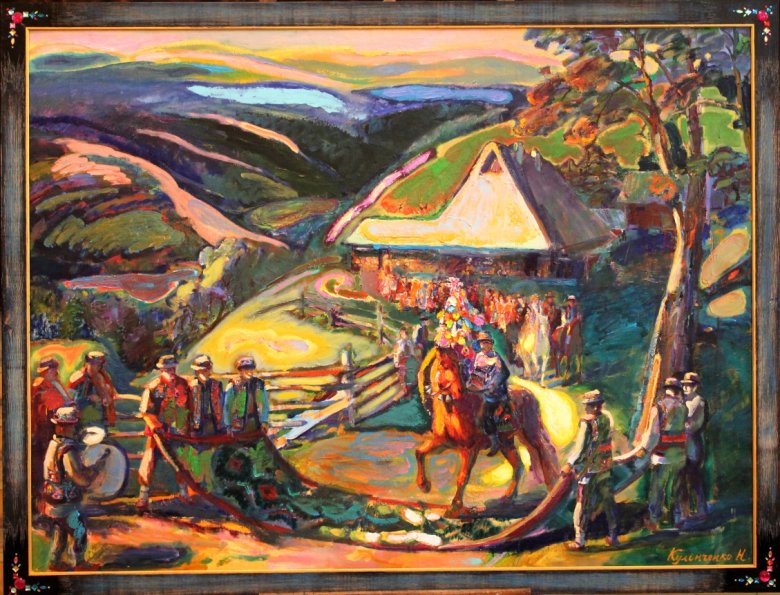
Composition in painting is one of the key elements that defines the expressiveness and depth of a work. It serves as the artist's unique language and a means through which the vision, emotions, and ideas of the painting are conveyed.
Composition allows the artist to organize all the elements of the painting in a way that makes them interact with each other, creating a harmonious whole. The importance of composition in painting cannot be overstated, as it is precisely through successful composition that a painting becomes attractive to the viewer, evoking the desire to linger on it longer.

When people untrained in painting look at the world around them, they often believe that snow is white, the sky is blue, and grass is green. But in reality, things are far more complex.
Pure colors are almost never found in nature. What we perceive depends on lighting, reflections, transparency, texture, and the context of objects. Understanding this nuance allows artists to create more realistic and emotionally resonant works. Observing shades, reflections, and the interplay of colors opens up limitless possibilities for creativity.
The size of a group plays a crucial role in the effectiveness of learning to paint. It determines how easily participants can interact with one another and the artist, how quickly they master new techniques, and whether they feel motivated to nurture their creativity and explore their inner potential with a sense of curiosity and excitement.
What group size for painting lessons ensures rapid and effective progress in learning, combines personalized instruction with group interaction, and fosters a comfortable and positive environment for the comprehensive development of artistic skills?
Painting is a remarkable art form that allows us to express our thoughts, emotions, and vision of the world through visual images. However, on the path to mastering painting, beginners often face certain difficulties and make common mistakes.
In this article, we'll explore the main problems that novices encounter and discuss ways to overcome them, making your artistic journey more productive and enjoyable. First and foremost, we should pay attention to the preparatory stage. Many beginners rush to grab brushes and paints, neglecting the importance of planning and preliminary sketching.
New on the Site:
-
 An Artist’s Unconventional Tools – Painting with Fingers, a Sponge, and Even a Fork
2026-05-24
An Artist’s Unconventional Tools – Painting with Fingers, a Sponge, and Even a Fork
2026-05-24
-
 Art Courses for Adults – How to Help Unlock Your Creative Potential?
2026-04-23
Art Courses for Adults – How to Help Unlock Your Creative Potential?
2026-04-23
-
 How to Convey Emotions in a Portrait – The Language of Feeling at the Tip of the Brush
2026-03-28
How to Convey Emotions in a Portrait – The Language of Feeling at the Tip of the Brush
2026-03-28
-
 How to Learn Portrait Painting from Scratch: A Step-by-Step Guide for Beginners
2026-02-16
How to Learn Portrait Painting from Scratch: A Step-by-Step Guide for Beginners
2026-02-16
-
 Being an Artist: Should You Compare Yourself to Other Artists? The Case For and Against
2026-01-29
Being an Artist: Should You Compare Yourself to Other Artists? The Case For and Against
2026-01-29
